
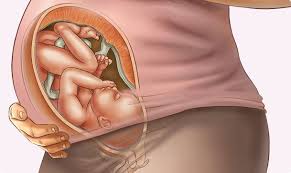
At 39 weeks of pregnancy, you are in what’s called a full-term pregnancy. Pregnancy normally lasts up to 40 weeks, and most women go into labour either a week before or after their due date. You can check our week-by-week pregnancy calendar for more insights.
Your baby is roughly 50.7 cm long from head to heel, approximately the size of a small watermelon. Between 37 and 39 weeks, your baby’s brain, lungs and liver undergo a crucial period of growth and development. If there is no complication, most doctors prefer to wait until the end of 39 weeks for the delivery, as this gives your baby a healthy start.
At 39th week of pregnancy, the baby would have undergone a complete skin transformation as well. The once transparent skin has now developed a tougher, new layer that provides better protection for the internal organs and also helps with temperature regulation. The baby is also covered with vernix, a white, waxy coating that protects the skin and helps to ease their passage through the birth canal at the time of delivery.
What’s Happening to Your Body
Back pain during pregnancy is common, and this may increase in your 39th week of pregnancy. You may also feel some pressure at the bottom of your bump at this stage. This is because your baby moves down into your pelvis and presses against your spine. This indicates that your body is preparing for labour.
At 39 weeks pregnant, you may notice more vaginal discharge than usual. This discharge should be thin and white, but should not have a strong odour. But, if you spot a ‘show’ – a slimy blob of mucus that is yellow or bloody, then it is one of the first signs of labour approaching. Your expected date may still be days away, but the final moment may arrive any time now.
Recognizing Signs of Labor at 39 Weeks
At 39 weeks, you are now in your full-term pregnancy. It is crucial to recognise and be aware of the signs of labour now so that you know when to contact your healthcare provider. You need to notify them when the contractions last for at least 60 seconds and occur every five minutes.
That being said, certain symptoms require immediate medical attention. Inform your healthcare provider if you notice:
- Bleeding from your vagina
- Brown or pink discharge
- Terrible headaches that won’t go away
- Severe itching especially at night
- Vision problems
- Pain below the ribs
- Extreme swelling
- Persistent stomach pains
- High fever above 37.5 degrees Celsius with no flu or cold symptoms
All these symptoms could indicate an emergency and should be immediately attended to.
What to Expect When Baby Arrives
Most of us have seen newborn babies coming out wailing immediately, but the reality is quite different from what is shown in movies. It actually takes a few seconds before the babies cry to clear out their airways. The doctor will be assessing your baby using the Apgar Scale ( Newborn health scoring system. Your baby will be assessed again at five minutes after birth on this scale to check their heart rate, muscle tone, breathing, skin colour and responsiveness.
Don’t be alarmed if you find your baby’s hands and feet appear blue in the beginning. This is because their blood circulation is still developing. Their breathing patterns might also be irregular at first, with babies having fast breaths followed by slow breaths with gaps up to five seconds between them.
Wrapping Up
At 39 weeks pregnant, your journey of anticipation, preparation and physical discomfort almost comes to an end. Just remember to monitor any signs of labour and stay in close touch with your healthcare provider.
Getting ready for your baby’s arrival is such an exciting time, but it also brings up big questions about their future health. Something a lot of parents look into these days is stem cell banking. Basically, the blood from the umbilical cord is rich in stem cells that could be incredibly useful for medical treatments down the road. If preserving these cells sounds like something you’d want for your family, you might want to check out LifeCell. Stem cells have the potential to safeguard your baby from 90+ serious illnesses in future and your family from 80+. It is definitely worth considering, and if you have not thought about it earlier, it is not too late even now.